Bootstrap Businesses Blog
The world has been talking a lot about how the global economy is in another recession and possibly an economic depression. While it is not pleasant to discuss for most people and businesses, we still believe it is a good idea to talk about it. Because discussing it gives us an opportunity to have a talk about how to remain financially strong in some of the most economically trying times in the history of the world, even if they may improve in a matter of months. Recessions are, after all, incredibly dangerous to households, small businesses and even individuals, especially when it comes to remaining even remotely close to as rich as you are.
Stop Playing And Investing
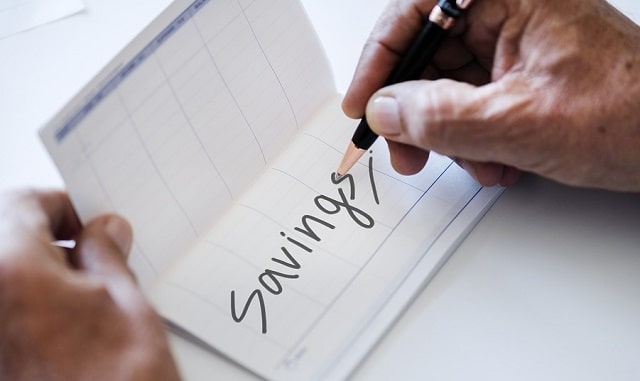
The first thing that you are going to want to do is to stop playing with your money. In this case, we don’t just mean stopping playing games, we also mean stop doing all of the things that cause it to not be your money any more. This means stop spending your money on things you don’t need, stop spending your money on things that you can go without and start trying to save this money. It is important to have had at least three months of operational costs saved up when the recession hits so that you can continue operating at a normal pace. Whether this means saving three months of salaries, three months of revenues worth, or something else, is up to the person or business managing the capital.
The next thing to do is to stop investing the money. The stock market is going to fall in the case of a recession. The only thing you want to be investing in, if you are going to be investing no matter what, are safe-haven assets. This means gold, this means foreign currency such as Yen or Swiss Franc, or any other safe-haven investment that you can think of. This will allow you to retain your net worth no matter how far the currency inflates. It would also be possible to keep your funds in the form of cash, but that might backfire if the inflation is too high and you end up losing too much money as a result.
If you are looking to invest in a business model that is affordable and recession proof, look into the best MLM companies to join for some lucrative long-term earnings potential at minimal cost.
Prepare & Start Saving Capital
We mentioned this in the previous paragraph, but preparation goes a little further than just having three months of savings available to spend. Preparing capital means preparing an easily accessible pool of funds that you can use, without a second thought, in order to purchase goods and services that will be indispensable in the case of a financial recession. Three months of savings are the bare minimum of what an individual has to have in order to support themselves, or for a business. The optimal amount of savings it's equivalent to around six months of revenue. This will allow a business or an individual to remain active during those months of low activity and reap the advantages of being active in an economic downturn. But, there are more advantages to having a large pool of capital.
Look To Invest At The Lowest Point
At one point the recession will hit its lowest point. This is where the market prices for everything will be the lowest they can get in the context of the recession. This is when real estate is cheapest, when stocks are the cheapest and when all goods are cheapest. Having an easily accessible, large pool of funds available to you in a moment such as this might mean the difference between coming out worse off, or coming out better off than you were before the recession. After the recession is over, the economy is going to start growing again. If invested at the right time, the users will start seeing their own fund s grow astronomically, allowing them to be richer after the recession than they were before going into it.
Stay Financially Disciplined
An economic recession or even depression is here again. Keep reading Bootstrap Businesses Blog for more assistance in staying financially fit in these tough economic times. Let's hope the global economy can turn it around in faster time than the last recession!
Economies are constantly evolving, as we have learned the hard way after the coronavirus pandemic. Covid-19 has created a global economic recession and potential depression worse than in 2000, 2001, and 2008 and fiscal policy has had to adjust accordingly.
Whereas financial policy deals with money, interest, and credit allocation, fiscal policy focuses on government taxation and expenditure. Together they represent the bulk of public-sector activities. Most stabilization attempts have concentrated on cutting government expenditures to achieve budgetary balance. But the burden of resource mobilization to finance essential public developmental efforts must come from the revenue side.
Public domestic and foreign borrowing can fill some savings gaps. In the long run, it is the efficient and equitable collection of taxes on which governments must base their development aspirations. In the absence of well-organized and locally controlled money markets, most developing countries have had to rely primarily on fiscal measures to stabilize the economy and to mobilize domestic resources. Developed countries of the OECD collect a much higher percentage of GDP in the form of tax revenue than developing countries do. According to an IMF study, in the 3 year period, developing countries collected 18.2% of GDP in tax revenues, white OECD countries collected more than double this share, 37.9%.
Developed countries may have higher demand for public expenditures and also greater capacity to generate tax revenue, and thus the causality likely runs in large part from greater development to higher tax levels. But to the degree that government resources are spent wisely, such as on human capital and needed infrastructure investments, some of the causality may run the other way as well. Typically, "direct taxes" - those levied on private individuals, corporations, and property - make up 20% to 40% of total tax revenue for most LDCs. "Indirect taxes", such as import and export duties and excise taxes (purchase, sales, and turnover taxes), constitute the primary source of fiscal revenue for LDCs.
Developed OECD countries generally rely more strongly on direct taxes, but this pattern is much less pronounced in Europe, where reliance on indirect taxes is almost as great as on direct taxes. It is not clear whether direct or indirect taxation is better for economic development because their impacts on critically important human capital accumulation is so complex. Avoiding extreme over reliance on any one form of taxation is a reasonable approach given the current state of knowledge. The tax systems (direct and indirect taxes combined) of many developing countries are far from progressive.
In some developing nations, such as Mexico, they can be highly regressive (meaning that lower-income groups pay a higher proportion of their income in taxes than higher-income groups). Taxation in developing countries has traditionally had two purposes. First, tax concessions and similar fiscal incentives have been thought of as a means of stimulating private enterprise. Such concessions and incentives have typically been offered to foreign private investors to induce them to locate their enterprises in the less developed country. Such tax incentives may indeed increase the inflow of private foreign resources, the overall benefits of such special treatment of foreign firms are by no means self-evident. The second purpose of taxation, the mobilization of resources to finance public expenditures, is by far the more important.
Whatever the prevailing political or economic ideology of the less developed country, its economic and social progress depends largely on its government's ability to generate sufficient revenues to finance an expanding program of essential, non-revenue-yielding public services - health, education, transport, legal and other institutions, poverty alleviation, and other components of the economic and social infrastructure. Many LDCs face problems of large fiscal deficits - public expenditures greatly in excess of public revenues - resulting from a combination of ambitious development programs and unexpected negative external shocks. With rising debt burdens, falling commodity prices, growing trade imbalances, and declining foreign private and public investment inflows, developing-world governments had little choice but to undergo severe fiscal retrenchment.
This meant cutting government expenditures (mostly on social services) and raising revenues through increased or more efficient tax collections. In general, the taxation potential of a country depends on five factors:
(i) The level of per capita real income.
(ii) The degree of inequality in the distribution of that income.
(iii) The industrial structure of the economy and the importance of different types of economic activity (for example: the importance of foreign trade, the significance of the modern sector, the extent of foreign participation in private enterprises, the degree to which the agricultural sector is commercialized as opposed to subsistence-oriented).
(iv) The social, political, and institutional setting and the relative power of different groups (for example, landlords as opposed to manufacturers, trade unions, village or district community organizations).
(v) The administrative competence, honesty, and integrity of the tax-gathering branches of government.
Applying for annual loans can help you manage and tackle difficulties which hit in life at the eleventh hour. These loans help you in time of fiscal blow. Inability to tackle financial dilemma is something which can happen to anyone. In the last few years, it has been observed that prices of fast moving consumer goods have skyrocketed.
However, income that people withdraw remains unchanged. It has made the lives of many people difficult, cash crisis has become to most of the families. UK citizens who are the only earning member in family find it difficult to meet all their needs and tasks with limited income they withdraw every month. When such people face financial issues, then things become difficult for them to manage. This is when applying for loan is the only solution left.
Overcome Unexpected Issues: Often this happens if you think of ways in which you can deal with problems that are of unforeseen nature. Life of a person who has small salary becomes very difficult when problems hit at a time when there is cash deficit. People who are seeking ways to surmount ongoing cash crisis can now choose to apply for additional funds to accomplish needs that are urgent. With the easy availability of this loan, you can fetch cash for needs and overcome them. These loans are apt for problems which are of small yet urgent nature.
Gain Money between 100 and 1000 Pounds! If you are thinking about the funds that you can borrow when applying for 12 month payday loans then it can go up to 1000 pounds. Money lenders offer amount as per the individual needs, in other words, money seekers can get access to customized loan deals. After analyzing loan application, money lenders sanction the amount and wire into the bank account the details of which they have. You'll be facing zero restriction when it comes to the utilization of the money approved. Money can be used for all kinds of qualifying needs. Words of caution though. Hidden charges - When you apply for loan, often lenders do not share or hide this information of hidden charges for which they ask at the later stage.
Ask about it while applying for loans to avoid problems later. Choose a lender with great care - Selecting the right lender is an important decision. Therefore, you should do proper research before zeroing in on the proper lender. Get access to swift funds by simply relying upon 12 Month Loans for tasks and needs that can't be avoided even for few days to improve your fiscal fitness. Knowledge is power when it comes to keeping yourself fiscally fit in evolving economic climates!